Yeast Nutrient Hydrolysate Production: Controlling Hydrolysis from Substrate to Stop Step
Yeast nutrient and hydrolysate lines lose money in two quiet places: a hydrolysis step that releases a different nutrient profile every batch, and a stop step that leaves enzyme activity behind, so the product keeps changing after it leaves the reactor. Enzymegen works with manufacturers producing yeast nutrients, fermentation supplements, and hydrolyzed media ingredients to match enzyme systems to the substrate, the process window, the documentation your customers ask for, and the fermentation performance they expect.
Our focus is practical: cleaner hydrolysis control, repeatable nutrient profiles, fewer scale-up surprises, and production-volume supply quoted per order for ingredient manufacturers, distributors and biotech buyers.
Enzyme supply for commercial yeast nutrient hydrolysates
Yeast nutrient manufacturers need more than a catalog enzyme. The enzyme must fit the raw material, the reactor conditions, the downstream clarification strategy, and the performance expectations of customers using the hydrolysate in fermentation.
Enzymegen supports enzyme selection and bulk supply for hydrolysates used in:
- Yeast nutrients for industrial fermentation
- Fermentation boosters and supplements
- Hydrolyzed yeast-derived media ingredients
- Protein-rich nutrient concentrates
- Nitrogen and peptide sources for microbial production
- Specialty media components for process development and scale-up
Our enzyme options are selected around process outcomes: peptide release, soluble nitrogen contribution, viscosity reduction, filtration behavior, batch consistency, and compatibility with your existing equipment.
Where enzyme selection affects commercial outcomes
Substrate fit
Different feedstocks respond differently to enzymatic hydrolysis. Autolyzed yeast, yeast cream, spent yeast biomass, plant proteins, grain-derived streams, and mixed nutrient bases can require different enzyme strategies.
Enzymegen helps evaluate the practical fit between enzyme type and substrate structure, including:
- Protein accessibility and cell-wall disruption needs
- Desired balance of peptides, amino acids, and soluble solids
- Starch, beta-glucan, or non-starch carbohydrate contribution
- Viscosity behavior during hydrolysis
- Clarification or centrifugation impact
- Sensory and color constraints for downstream ingredient use
Hydrolysis control
For yeast nutrient hydrolysate production, uncontrolled breakdown can create inconsistent media behavior. Over-hydrolysis may shift taste, color, osmotic contribution, or nutrient balance. Under-hydrolysis can leave insoluble material, poor release, and filtration burden.
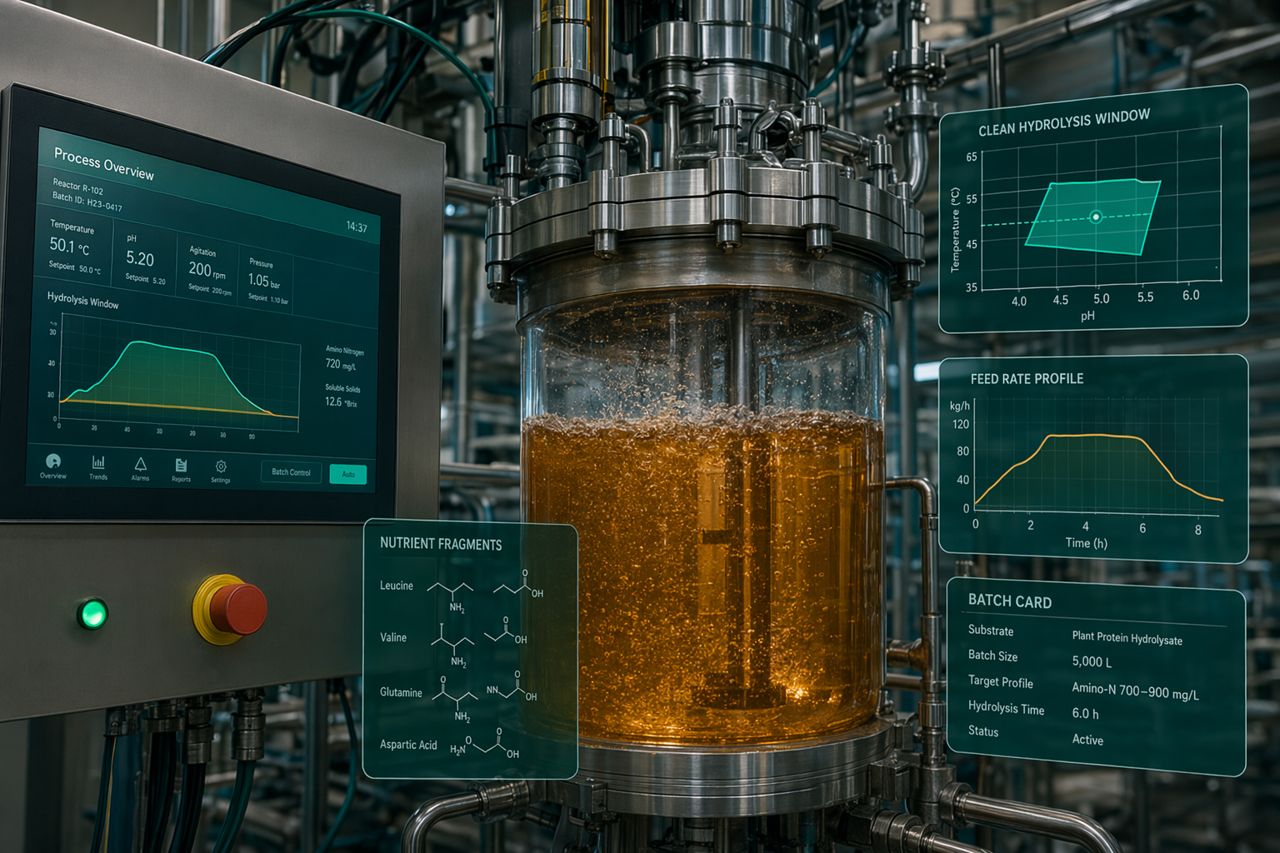
We support controlled hydrolysis through enzyme systems aligned to your operating window, including temperature, pH range, residence time, feed concentration, agitation limits, and downstream heat treatment.
Media consistency
Fermentation customers care about repeatable performance. A hydrolysate that looks acceptable on a spec sheet may still produce variation in growth rate, titer, by-product formation, foam behavior, or feed response.
Enzymegen focuses on enzyme supply that supports consistent nutrient release from batch to batch, with documentation and lot traceability suitable for B2B ingredient manufacturing.
Enzyme categories commonly used in yeast nutrient production
Enzymegen can support single-enzyme supply or blended enzyme approaches depending on your substrate and target profile.
Proteases and peptidase-focused systems
Used to convert protein-rich substrates into soluble nitrogen, peptides, and smaller nutrient fragments. These systems are often central to yeast nutrient hydrolysate production where fermentation performance depends on accessible nitrogen.
Commercial value:
- Improved soluble nitrogen release
- More controlled peptide distribution
- Reduced insoluble protein carryover
- Better repeatability in nutrient contribution
Carbohydrases
Used where starches, beta-glucans, or other carbohydrates contribute to viscosity, processing difficulty, or fermentable nutrient profile.
Commercial value:
- Lower process viscosity
- Improved pumpability and heat transfer
- Better solids handling
- More predictable carbohydrate contribution
Cell-wall and biomass-processing enzyme systems
Used when yeast-derived materials or biomass streams require improved disruption, soluble yield, or clarification behavior.
Commercial value:
- Improved release from cellular material
- Better extraction efficiency
- Lower separation load
- More consistent hydrolysate quality
Running the hydrolysis window and stopping it cleanly
Most batch drift in protein and yeast-derived hydrolysates is not caused by the enzyme failing to work. It is caused by a hold that is not controlled tightly, or by a stop step that does not fully end the reaction. Both are fixable with a written window and a verified stop.
The hold: mild and controlled
Protein hydrolysis for peptide-rich ingredients is commonly run in a temperature-controlled reactor at 40 to 55 °C for 2 to 6 hours, with pH held in the neutral or alkaline range to suit the protease chosen. Neutral, alkaline or blended proteases can be used, and the degree of hydrolysis is set by the product target rather than pushed as far as possible: the hold is where you decide the peptide size distribution, and therefore taste, solubility and nutrient contribution.
Compared with long high-temperature cooking or acid and alkali hydrolysis, a mild enzymatic hold can avoid much of the browning, bitterness and nutrient damage that harsher routes cause, and it gives a hydrolysate that is easier to keep consistent from batch to batch.
The stop: where batches quietly drift
Once the hydrolysis target is reached, the reaction has to be ended, typically by raising the liquor to 85 to 95 °C and holding it. If that step is shortened or skipped, the enzyme keeps cutting: peptides keep breaking down, flavour shifts, bitterness rises, specifications move between the reactor and the customer, and microbial counts can climb.
Three details explain why a stop that looks correct on paper still leaves activity behind:
- Substrate protection. High solids, high sugar or fat content shield the enzyme protein and raise its heat tolerance, so a concentrated liquor needs a higher temperature or a longer hold than a dilute one. Do not copy a stop recipe written for a thin liquor onto a thick one.
- pH works with temperature. An enzyme is most heat-stable at the pH it prefers. Moving the liquor away from that pH lowers the temperature needed to stop it, which can reduce browning and flavour loss on heat-sensitive products.
- Heating method matters. A jacketed tank heats slowly and can brown the product during a long hold, but it is simple and controllable and suits protein hydrolysis. Plate or tube heat exchangers run a short, high-temperature stop with less heat damage, at a higher equipment cost.
Reference stop conditions by enzyme type
Use these as starting points to validate on your own liquor, not as fixed settings:
| Enzyme | Reference stop condition |
|---|---|
| Neutral protease | 75 to 80 °C for 10 minutes |
| Alkaline protease | 80 °C for 5 to 10 minutes, or lowering pH below 5.0 at ambient temperature |
| Acid protease | 70 to 75 °C for 10 minutes; acidic conditions raise its heat stability, so do not lower the temperature |
| 5'-phosphodiesterase (nucleotide production from RNA) | 95 °C for 10 minutes, so the nucleotides formed are not degraded further |
Higher-solids yeast liquors usually sit at the top of these ranges or above them.
Prove the stop, batch by batch
Reaching the temperature and time on the chart does not mean residual activity is zero. Sample and test residual enzyme activity after the stop in routine production, not only during validation. After the stop, solids are usually removed by plate-and-frame filtration or centrifugation, with ultrafiltration where a cleaner, lower-molecular-weight fraction is required. Concentrating under vacuum at moderate temperature, often in the 50 to 65 °C range, rather than at atmospheric boiling, helps avoid browning and bitterness. If a viscous hydrolysate sticks during spray drying, a carrier can be added to protect powder yield.
When you request a quote, tell us your hold conditions, your current stop step, and the drift you see (flavour, colour, nitrogen or peptide profile, shelf behaviour). We will match enzyme options to that window.
Built for recurring kilo-scale purchasing
Your team may already know the enzyme class required. The harder questions are commercial and operational:
- Can the enzyme be supplied reliably at recurring production volumes?
- Does the lot documentation meet your purchasing and quality requirements?
- Can the product be evaluated in your process without forcing a full reformulation?
- Is the recommended enzyme practical for your temperature, pH, and hold-time constraints?
- Can supply scale with new customer demand or new hydrolysate SKUs?
Enzymegen supports quote-based bulk supply for manufacturers that need dependable procurement rather than transactional small-pack ordering.
Scale-up support from bench to production
A hydrolysis condition that works in a small vessel does not always transfer cleanly to larger reactors. Mixing intensity, heat-up time, solids loading, and hold-time variation can change the way nutrients are released.
We support scale-up discussions around:
- Enzyme addition point and dispersion strategy
- Hydrolysis time and temperature window
- Solids concentration and viscosity limitations
- Inactivation or downstream heat step compatibility
- Clarification, filtration, or centrifugation impact
- Finished ingredient performance targets
The goal is not to complicate your process. The goal is to help your team choose an enzyme system that behaves predictably inside your existing manufacturing constraints.
Documentation for ingredient manufacturing teams
Enzymegen can support B2B purchasing and quality review with documentation appropriate to the product and supply arrangement, such as:
- Product specification sheets
- Safety documentation
- Allergen and origin statements where applicable
- Lot traceability documentation
- Packaging and storage guidance
- Regulatory support documents available by request
If your internal approval workflow requires specific documentation, include those requirements with your quote request so we can confirm fit early.
What to include in your quote request
To help us recommend the right bulk enzyme option, share as much of the following as possible:
- Feedstock or substrate type
- Target hydrolysate application
- Current process temperature and pH range
- Hydrolysis time window
- Solids concentration or viscosity challenges
- Desired nutrient outcome, such as soluble nitrogen, peptide release, or viscosity reduction
- Current pain points, including batch variation, filtration load, yield loss, or fermentation inconsistency
- Expected purchase volume and delivery region
- Required documentation for vendor approval
Faceless explainer video: enzyme-controlled nutrient release
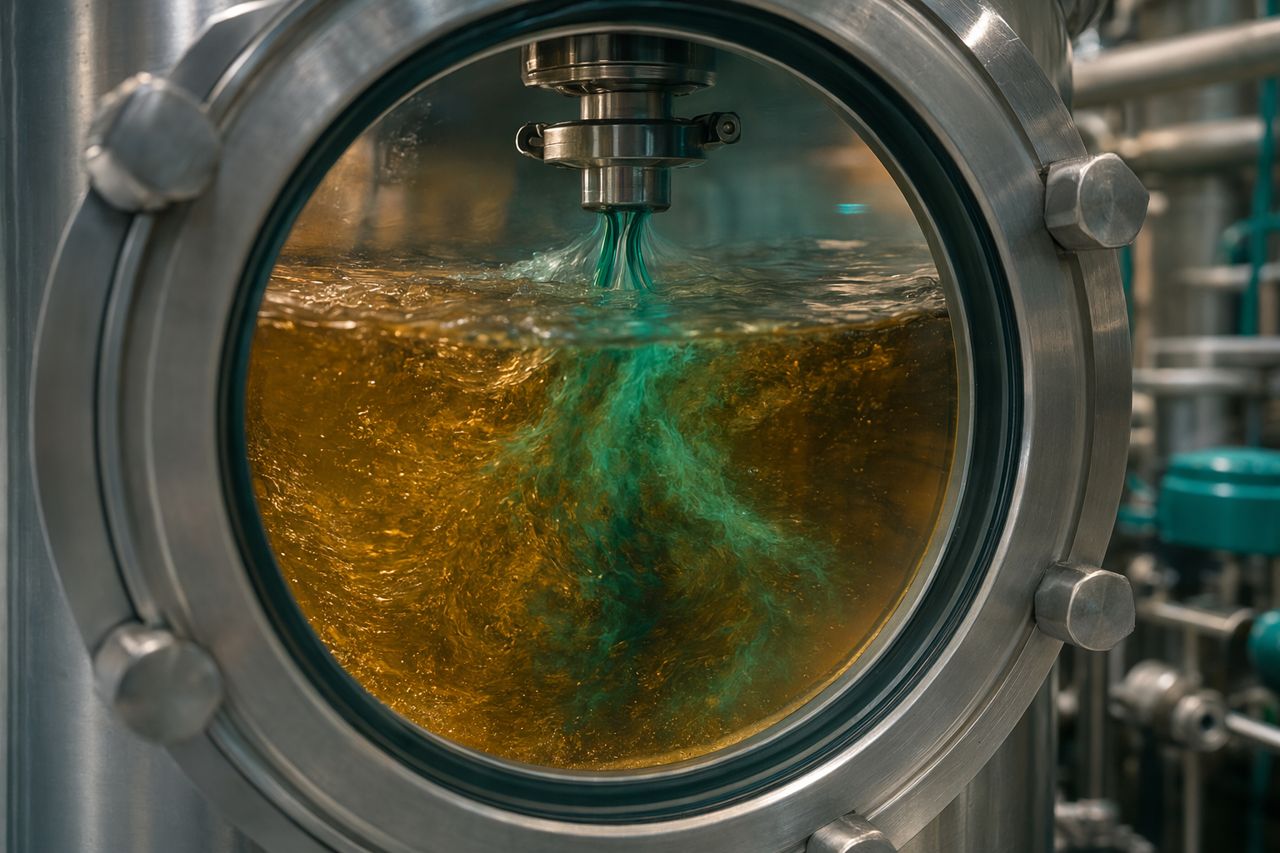
This page includes a short faceless explainer showing how controlled enzyme hydrolysis converts dense fermentation ingredient streams into more consistent nutrient inputs. The visual sequence follows amber media through enzyme addition, substrate breakdown, process monitoring, documentation, and commercial supply planning.
Why fermentation ingredient manufacturers work with Enzymegen
Enzymegen is built for technical B2B conversations. We do not position enzyme selection as a generic add-on. We look at the substrate, the manufacturing step, the finished ingredient role, and the fermentation outcome your customers expect.
Manufacturers choose Enzymegen when they need:
- Bulk enzyme supply for recurring production
- Practical enzyme recommendations tied to hydrolysate goals
- Support for controlled hydrolysis and scale-up
- Documentation for purchasing and quality teams
- A commercially grounded supplier conversation before committing to volume
Request a quote
Use the on-site form to tell us about your substrate, process window, and target hydrolysate profile. Enzymegen will review the information and respond with suitable bulk enzyme options, documentation availability, and next-step recommendations.