How Process Development Teams De-Risk Hydrolysate Scale-Up Before Production Runs
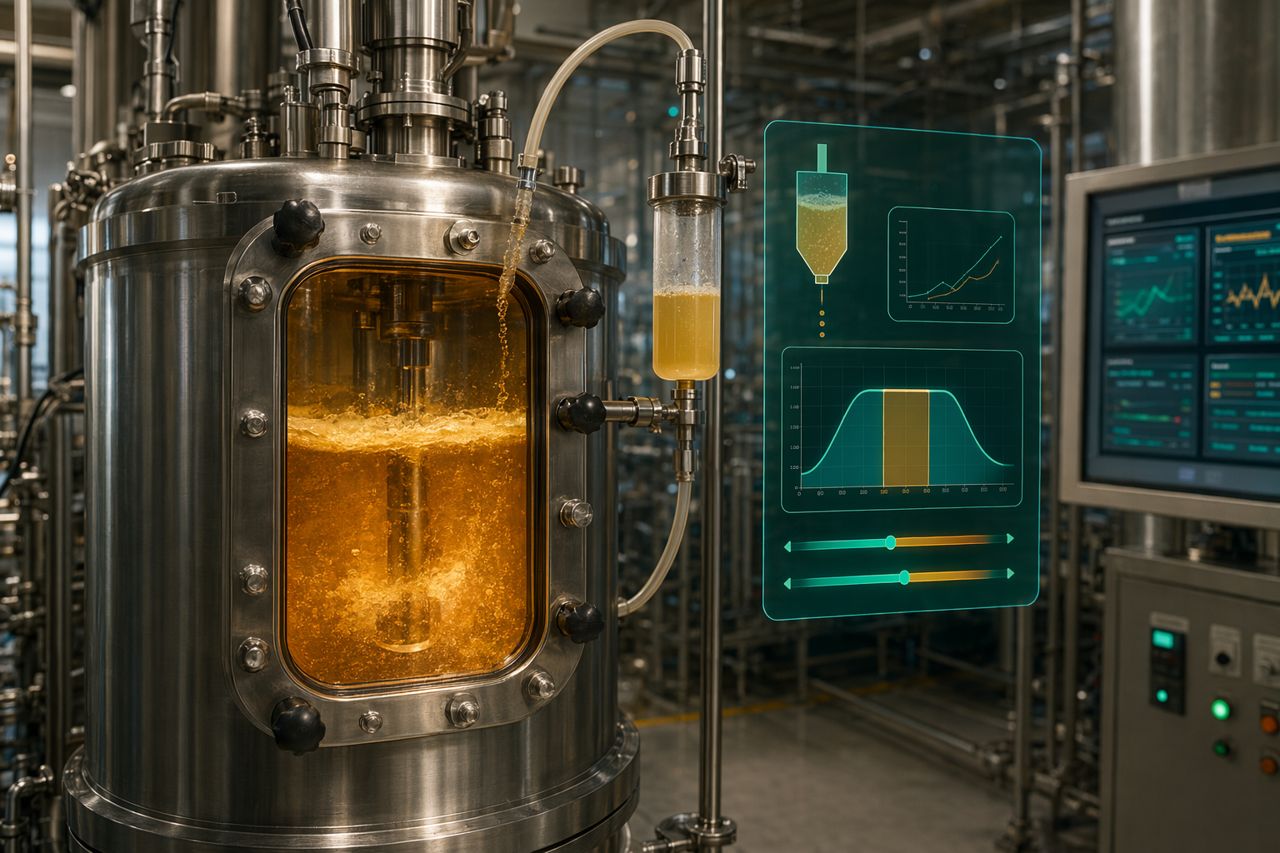
For a fermentation ingredient manufacturer, hydrolysate scale-up is not just a volume increase. It is a transfer of nutrient profile, handling behavior, filtration performance, sterilization fit, and batch documentation from controlled development work into repeatable production.
The right enzyme supplier for fermentation media production should help process development teams reduce uncertainty before the first production run—not after a failed batch exposes the gap.
This article outlines practical gates for scaling enzyme hydrolysis with stronger control over substrate variation, digestion profile, media consistency, and commercial readiness.
Start With the Substrate, Not the Enzyme
Most hydrolysate scale-up risk begins with the raw material. Plant proteins, yeast-derived materials, grain fractions, animal-free nitrogen sources, and starch-bearing substrates can all shift from lot to lot. Protein content, carbohydrate balance, mineral load, fat carryover, particle size, and heat history influence how a substrate hydrates, digests, filters, and performs in fermentation media.
Before enzyme selection is locked, process teams should define the substrate envelope:
- Acceptable supplier and lot variation
- Typical moisture and solids behavior
- Expected protein or starch accessibility
- Heat treatment history and denaturation risk
- Insoluble load and downstream separation impact
- Allergen, animal-origin, or regulatory constraints where relevant
- Desired nutrient contribution in the final medium
This gives enzyme screening a commercial target. The goal is not maximum breakdown in isolation. The goal is a hydrolysate that supports fermentation performance while remaining manufacturable.
Use Small Batches to Learn the Failure Modes
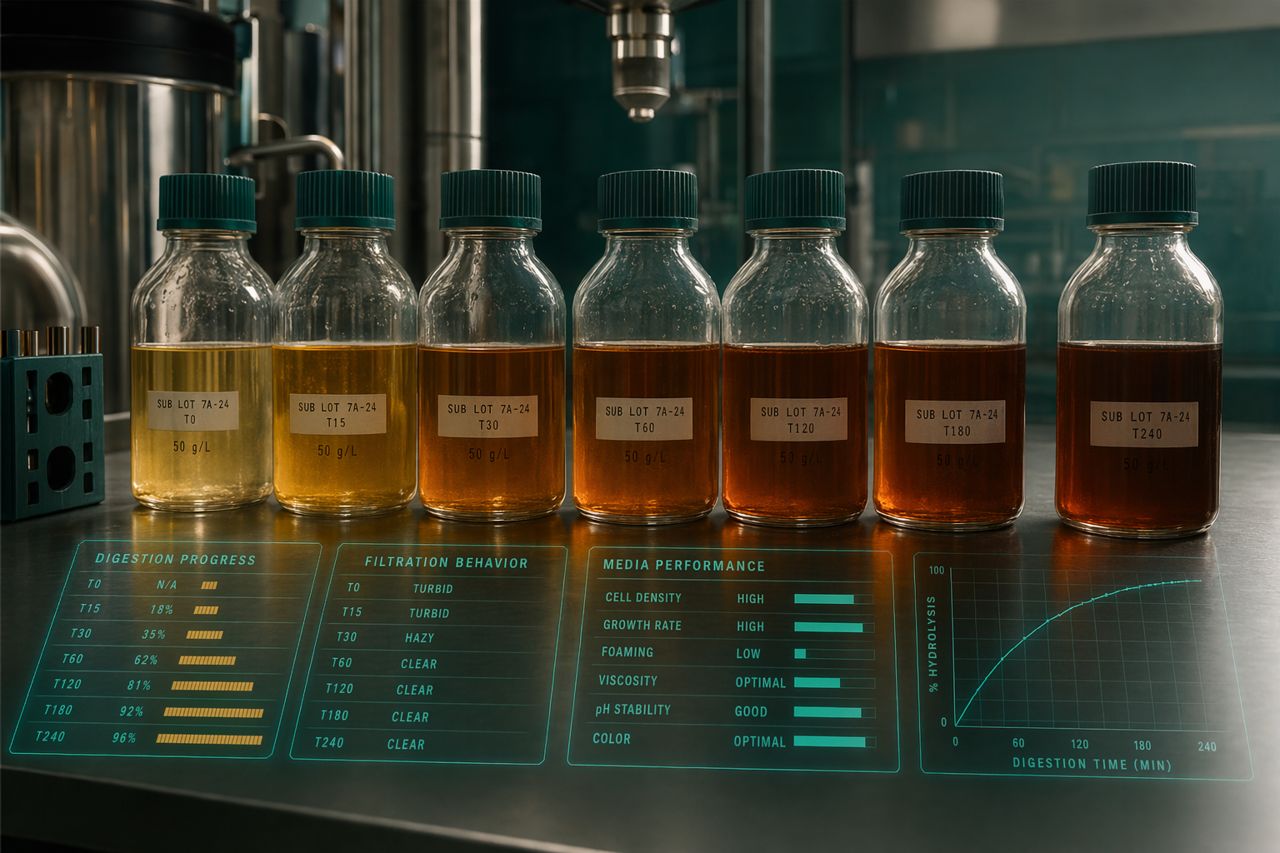
Small-batch work should do more than identify a promising hydrolysis condition. It should expose what can go wrong when the process moves into larger vessels.
A useful development batch should capture:
- Hydration sequence and mixing sensitivity
- Viscosity changes during digestion
- Foaming tendency and surface behavior
- pH drift under realistic buffer or correction strategy
- Temperature hold stability
- Solids suspension and settling patterns
- Filtration or centrifugation behavior
- Color, odor, and Maillard risk after heat exposure
- Nutrient profile consistency across timepoints
This learning is especially important for fermentation media because a hydrolysate may look acceptable analytically but still create process issues in sterile handling, feed preparation, or bioreactor performance.
Define the Hydrolysis Window Before Scale-Up
Process development teams should avoid treating hydrolysis as a single endpoint. A production-ready hydrolysate needs an operating window.
That window usually includes:
- Starting solids range
- Enzyme addition sequence
- pH and temperature control range
- Agitation and hydration requirements
- Minimum and maximum reaction time
- Hold conditions before separation or heat treatment
- Stop point or stabilization approach
- Acceptable variation in soluble nitrogen, peptide distribution, reducing sugars, or other fit-for-purpose markers
For media applications, tighter control is not always about making the hydrolysate more refined. It is about preventing hidden variation that later appears as titer drift, slower growth, feed instability, or inconsistent metabolite profiles.
Connect Hydrolysate Specs to Fermentation Outcomes
A hydrolysate specification is only useful if it connects to fermentation behavior. Process development teams should link material attributes to performance indicators that matter in the target process.
Examples include:
- Growth rate and lag phase behavior
- Final titer or productivity trend
- Feed tolerance at target concentration
- Osmolality and conductivity contribution
- Nitrogen release profile
- Carbon contribution from hydrolyzed starch or oligosaccharides
- Inhibitory carryover or excess browning risk
- Batch-to-batch response in the production strain
This prevents over-optimizing laboratory chemistry while under-controlling the media variable that actually affects commercial fermentation.
Manage Raw Material Variation With Controlled Qualification Lots
Raw material variation cannot be removed completely. It can be characterized and managed.
Before production transfer, run qualification lots that represent the expected supply range. This can include different harvest periods, suppliers, processing histories, or protein levels. The purpose is to determine whether the enzyme process can absorb normal variation without moving the hydrolysate outside its performance window.
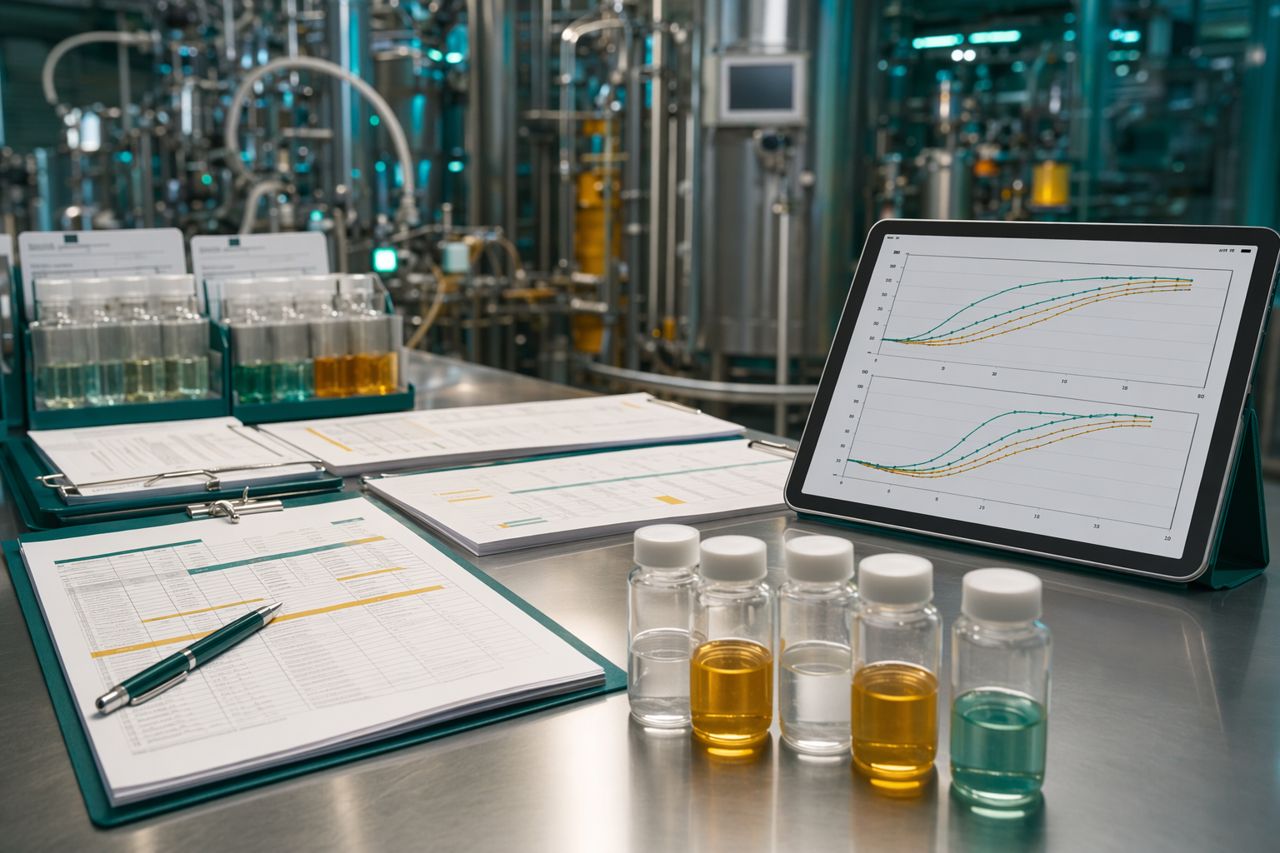
For each qualification lot, document:
- Incoming material observations
- Pre-treatment requirements
- Hydrolysis response
- Separation behavior
- Sterilization or heat-hold response
- Final hydrolysate profile
- Fermentation media performance results
If a raw material lot requires a different correction strategy, that strategy should be written into the process logic before production—not improvised during the first scale run.
Build Documentation While the Process Is Still Flexible
Documentation should not wait until scale-up is complete. The earlier it is built, the easier it is to identify missing controls.
A production-ready enzyme hydrolysis package should include:
- Substrate description and acceptance criteria
- Enzyme use rationale and process role
- Batch record draft with addition order and hold points
- Critical process parameters and acceptable ranges
- In-process observations and decision points
- Sampling plan and retained sample approach
- Cleaning, handling, and storage considerations
- Change-control expectations for raw materials and enzyme lots
- Certificate, traceability, and regulatory documentation requirements
This is where a technical supplier relationship matters. Process teams need more than a product name. They need support that helps translate enzyme performance into a controlled manufacturing instruction.
Production-Readiness Gates for Hydrolysate Scale-Up
Before a production run, use gates that force technical and commercial alignment.
Gate 1: Substrate Fit
Confirm that the selected substrate can be sourced consistently and prepared reproducibly. If hydration or insoluble behavior varies too widely, resolve that before scaling enzyme conditions.
Gate 2: Enzyme Process Fit
Confirm that the enzyme system provides the intended hydrolysis profile within a practical process window. The process should tolerate normal plant conditions without requiring fragile control.
Gate 3: Media Performance Fit
Confirm that the hydrolysate supports the intended fermentation outcome across representative lots. Look for consistent growth, productivity, and feed behavior—not just one strong development run.
Gate 4: Downstream Handling Fit
Confirm that the hydrolysate can be separated, concentrated, sterilized, stored, or blended as required. Many scale-up issues appear after hydrolysis, not during it.
Gate 5: Documentation Fit
Confirm that batch instructions, acceptance criteria, quality documentation, and change-control expectations are clear enough for production and quality teams to execute.
What to Expect From an Enzyme Supplier for Fermentation Media Production
A suitable enzyme partner should be able to discuss substrate fit, process constraints, and scale-up risk in manufacturing terms.
Look for support around:
- Enzyme selection for protein, starch, or mixed-substrate hydrolysis
- Practical digestion windows for production equipment
- Lot-to-lot consistency planning
- Documentation needed for ingredient manufacturing
- Sample evaluation and pilot learning structure
- Scale-up troubleshooting before production commitment
- Commercial supply planning aligned with your forecast
For fermentation ingredient manufacturers, enzyme procurement is not only a price decision. It affects media consistency, production scheduling, rework risk, and customer confidence in the finished ingredient.
A Better First Production Run Starts Earlier
The most reliable hydrolysate scale-ups are not rushed from bench success into plant volume. They are built through controlled learning: representative substrates, defined process windows, linked fermentation outcomes, and documentation that production teams can execute.
Enzymegen supports fermentation ingredient manufacturers with enzyme solutions and scale-up guidance for controlled hydrolysate production. If you are developing or transferring a protein, starch, or mixed-substrate hydrolysate for fermentation media, our team can help review the process target, substrate constraints, and documentation needs.
Request a quote through the on-site contact form to discuss enzyme supply, sample evaluation, and production-readiness support for your hydrolysate program.